Reader-supported: we may earn a commission from links on this page.
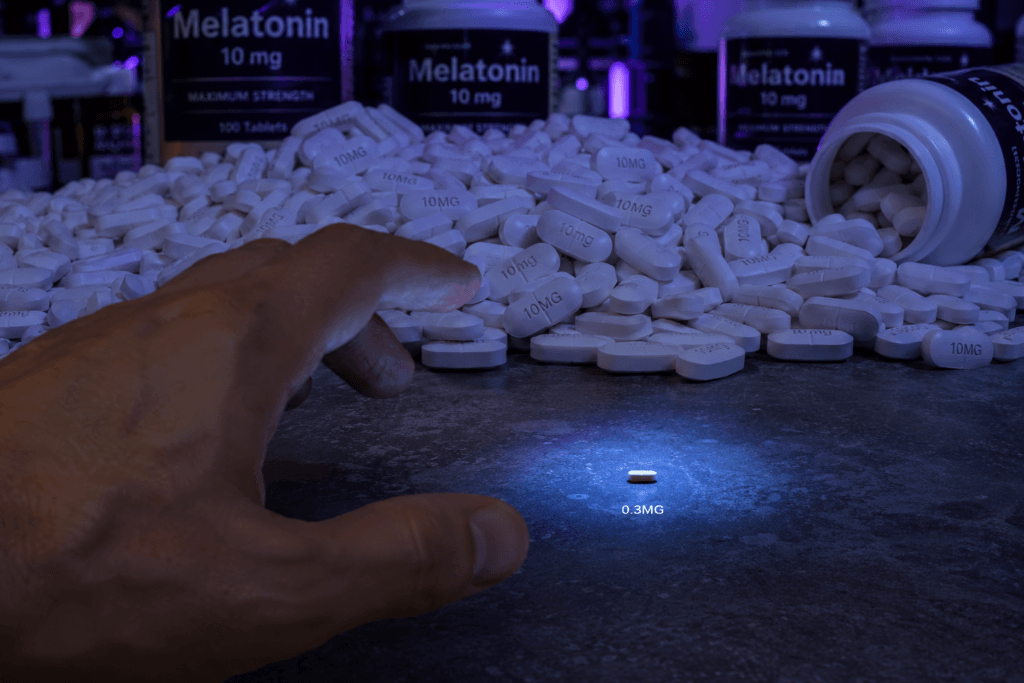
Quick answer: Many people take more melatonin than they need. In a well-known MIT study, a 0.3 mg dose improved sleep in older adults with insomnia, while a 3 mg dose kept melatonin levels raised into the next morning. Common store doses are 5 to 10 mg. Melatonin’s benefit is modest at any dose, so if you use it, start low (0.3 to 1 mg), take it about 30 to 60 minutes before bed, and fix your sleep habits first.
We went through the research on melatonin dosing, what higher doses actually do, and how accurate supplement labels are.
Table of Contents
What the Research Says About Melatonin Dose
In a 2001 study from MIT, adults over 50 with insomnia tried placebo and three doses: 0.1 mg, 0.3 mg and 3 mg. The 0.3 mg dose, which raises blood melatonin to about normal nighttime levels, restored sleep efficiency. The 3 mg dose also improved sleep, but it lowered body temperature and left melatonin levels raised into the daylight hours.
That’s the basis for the idea that small doses work for many people. But bigger isn’t always useless: a 2013 meta-analysis of 19 studies found melatonin helped people fall asleep about 7 minutes faster and sleep about 8 minutes longer on average, and higher doses had a slightly larger effect on falling asleep. Sleep quality improved similarly regardless of dose.
| Dose | What studies suggest |
|---|---|
| 0.3 to 1 mg | Close to natural nighttime levels; enough for many people |
| 3 mg | Works, but can keep levels raised into the morning |
| 5 to 10 mg (common store doses) | Not clearly better for sleep quality; may be more likely to leave you groggy |
Is 10 mg of Melatonin Too Much?
For most adults, 10 mg is more than you need. It’s about 33 times the 0.3 mg dose that restored sleep in the MIT study, and in the 2013 review, larger doses didn’t clearly improve sleep quality. A big dose is also more likely to keep melatonin in your system into the morning. And because a 2023 JAMA study found gummies with up to 347% of the amount on the label, a “10 mg” gummy could contain even more. If 10 mg is what you take now, try a much smaller dose, such as 0.3 to 1 mg, and talk to your doctor if you need melatonin most nights.
Why High Doses Can Backfire
- Morning grogginess. When melatonin stays raised after you wake up, as the 3 mg dose did in the MIT study, you may feel sluggish the next morning.
- It’s a timing signal. Melatonin mainly tells your body clock that it’s night. It isn’t a sedative, so when you take it matters as much as how much.
- Labels are unreliable. In a 2023 JAMA study, 22 of 25 melatonin gummy products were mislabeled, containing 74% to 347% of the stated amount. Your “5 mg” gummy could be much stronger.
Melatonin is generally considered safe for short-term use in adults, according to the National Center for Complementary and Integrative Health, but less is known about long-term use. Talk to your doctor before giving it to children or using it long term.
How to Take Melatonin the Smart Way
- Start low: 0.3 to 1 mg. Only go higher if a low dose clearly does nothing after a week or two.
- Time it: take it 30 to 60 minutes before your target bedtime, at the same time each night.
- Consider tablets over gummies, since the JAMA study found gummy labels so unreliable.
- Use it short term for things like jet lag or resetting your schedule, not as a nightly fix for long-term insomnia.
Check the current price of Natrol Melatonin 1 mg Fast Dissolve Tablets
A widely available 1 mg tablet with thousands of buyer ratings. It’s an easy way to start low, and you can split a tablet for a smaller dose.
Fix the Basics Before You Reach for Pills
Melatonin’s effect is small, so the basics matter more: a cool, dark room, a regular bedtime and less screen time before bed. Bright screens late at night can delay your body’s own melatonin release, so turning them off or dimming them an hour before bed helps more than special glasses. Our research on sleep myths and what actually helps you fall asleep covers the evidence.
Thinking about magnesium instead? We went through the clinical trials in our guide to magnesium for sleep, including which form has the best evidence and how much to take.
A good blackout eye mask is one of the few inexpensive sleep products with some research behind it. Check the current price of the Manta Original Sleep Mask.
If you have trouble sleeping most nights for three months or more, talk to a doctor about cognitive behavioral therapy for insomnia (CBT-I), the recommended first treatment for chronic insomnia.
The PrimeDigger Verdict
Most people don’t need 5 or 10 mg of melatonin. Research shows small doses can work, bigger doses can linger into the morning, and labels often don’t match what’s inside. If you use melatonin, start at 0.3 to 1 mg, time it well, and treat it as a short-term tool rather than a nightly crutch.
Want the deeper investigation? Our ebook The Supplement Scam Bible shows how supplement labels, dosage claims and “clinically proven” wording mislead, and how to read a label for what it actually says. Get the ebook ($19) → See all our ebooks →
This article is for general information, not medical advice. If you have a health condition, are pregnant, or take medication, talk to your doctor before using melatonin. Read our Health Disclaimer.
Frequently Asked Questions
Is 10 mg of melatonin too much?
For most adults, it’s more than they need. In a 2001 MIT study, 0.3 mg restored sleep in older adults with insomnia, and a 2013 review of 19 studies found larger doses didn’t clearly improve sleep quality. Big doses are more likely to leave you groggy the next morning, so many people do better starting at 0.3 to 1 mg.
What is the best melatonin dose for adults?
Many experts suggest starting with 0.3 to 1 mg. In a 2001 MIT study, 0.3 mg improved sleep in older adults with insomnia, while 3 mg kept melatonin levels raised into the next morning.
Can you take too much melatonin?
Higher doses are not clearly better for sleep quality and may be more likely to cause next-day grogginess. Also, a 2023 JAMA study found many gummies contain far more melatonin than the label says.
How long before bed should I take melatonin?
Most guidance suggests about 30 to 60 minutes before your target bedtime, taken at the same time each night.
Is it safe to take melatonin every night?
It is generally considered safe for short-term use in adults, but less is known about long-term nightly use. Talk to your doctor if you need it most nights.
Sources
- Zhdanova et al. (2001), Journal of Clinical Endocrinology and Metabolism: Melatonin treatment for age-related insomnia
- Ferracioli-Oda et al. (2013), PLoS One: Meta-analysis, melatonin for the treatment of primary sleep disorders
- Cohen et al. (2023), JAMA: Quantity of Melatonin and CBD in Melatonin Gummies Sold in the US
- NCCIH: Melatonin, What You Need To Know