
Reader-supported: we may earn a commission from links on this page.
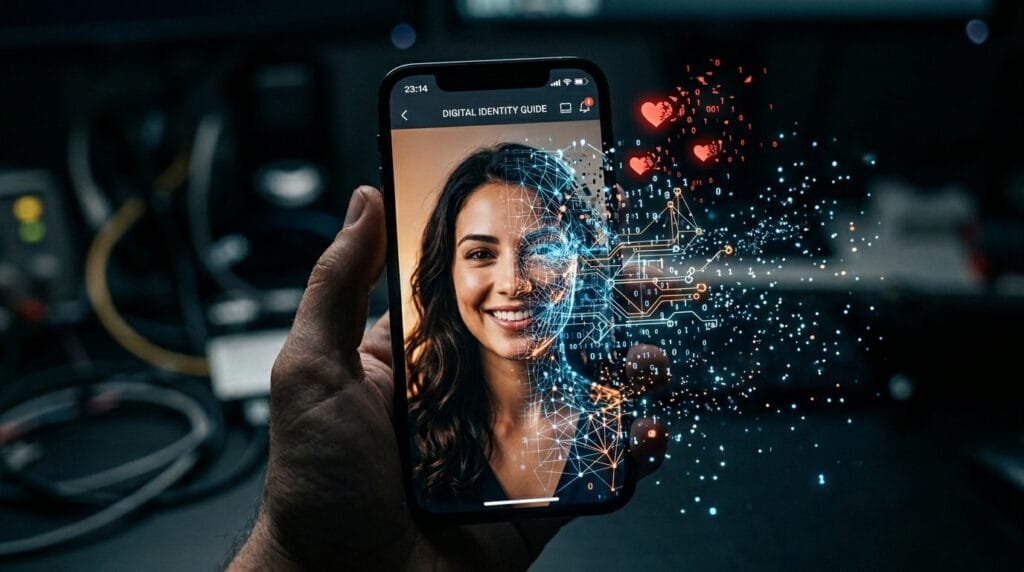
If you think you know how to spot AI romance scams, you might be relying on old advice. Bad grammar and refusing to get on the phone used to give catfishers away. Today, AI writes their messages, makes their photos and can even fake their voice.
We went through what the FBI and the FTC say about these scams. Here is how AI catfishing works, the checks that still catch it, and what to do if it has already happened to you.
Quick answer: 3 checks that catch most AI catfish
- Reverse image search their photos with Google Lens or TinEye. The same face under another name means a fake profile.
- Never send money, gift cards or crypto to someone you have not met in person. Any request is the red flag.
- Meet in a public place. Constant excuses not to meet, even after video calls, should end the conversation.
Table of Contents
How Big Is the Problem?
Romance scams are one of the costliest crimes reported to the FBI. In its 2025 Internet Crime Report, the FBI’s Internet Crime Complaint Center (IC3) recorded $929,287,469 in losses to confidence and romance fraud. That is only what victims reported. Many people never report out of embarrassment, so the real number is higher.
Romance scams also often lead into crypto “investments”. The FTC lists an offer to help you start investing in cryptocurrency as a sign of a romance scam.
How Scammers Use AI
AI did not invent romance scams. It removed two things that used to slow scammers down: language skills and time. The FBI issued a public warning in December 2024 that criminals use generative AI to make their fraud more believable and to reach more people.
1. Chatbots write the messages
Scammers can use AI chat tools to write warm, fluent messages in perfect English. One person can keep many fake relationships going at once. The messages adapt to your tone and remember what you told them, so poor grammar is no longer a useful warning sign.
2. AI-made photos and fake IDs
The FBI says criminals use AI-generated images for fake social media profile photos and fake identity documents. These faces may not belong to any real person, which is why a reverse image search can come back empty (more on that below).
3. Voice cloning
“Make them call you” used to be solid advice. The FBI warns that criminals now use AI-generated audio to imitate real people, including a loved one asking for urgent money. A short clip of someone’s voice from a public video can be enough to start. Hearing a voice is no longer proof of who is speaking.
4. Video calls and video clips
The FBI says criminals use AI-generated video in real-time video chats and send short videos to “prove” an online contact is real. A video call is still worth asking for, because many scammers will refuse. But it is no longer the final test.
Romance scams are only one way criminals use these tools. For voice-clone “family emergency” calls, deepfake bosses, fake AI apps and the other AI scams to know, see our guide to AI scams and how to spot them.
How to Reverse Image Search a Catfish (Free)
Many romance scammers still use photos stolen from real people. A free reverse image search shows where else a photo appears online, and if the same face turns up under a different name, the profile is fake. The FTC recommends this check for anyone you’ve met online.
- Google Lens: on a computer, right-click the photo in Chrome and choose “Search with Google Lens”. On a phone, save the photo, open the Google app and tap the camera icon.
- TinEye: upload the photo or paste its image address at tineye.com. It’s good at finding older copies of the same picture.
- Bing Visual Search: upload the photo at bing.com/visualsearch for a second opinion.
- Search several photos, not just the first one, and crop out busy backgrounds so the search focuses on the face.
A clean result doesn’t prove someone is real. AI tools can now create faces that have never been posted anywhere, so a reverse search finds nothing. Look closely for the usual giveaways: earrings that don’t match, warped backgrounds, strange hands or teeth, and text in the photo that looks like gibberish. If the photos pass but the person still won’t meet or video chat on your terms, treat that as the bigger red flag.
Paid people-search sites such as Social Catfish also cross-check names, numbers and emails. Keep in mind they’re data brokers themselves, so start with the free tools above.
How to Check a Video Call or Voice Call
No single check is proof, but these tips from the FBI make a fake harder to pull off:
- Look for visual flaws: distorted hands or feet, odd teeth or eyes, a face that looks irregular, and movement or shadows that don’t look natural.
- Listen to the words, not just the voice: notice if the tone or word choice doesn’t sound like the person.
- Hang up and call back on a number you already know, never one they just gave you.
- Use a secret word with family members, so a “loved one” in a crisis call can prove who they are.
These flaws are getting harder to spot as the tools improve. Treat a smooth video call as one good sign, not as a pass.
The Red Flags That Still Matter
AI changes how scammers sound and look, but not what they want. These warning signs, most of them from the FTC, still give them away:
- Love bombing: intense feelings and “soulmate” talk within days or weeks.
- Moving off the app fast: they want to switch to email, text or WhatsApp right away.
- Always a reason not to meet: working abroad, on an oil rig, in the military or travelling.
- A money request: medical bills, a plane ticket, a visa, customs fees or an emergency.
- Odd ways to pay: gift cards, wire transfers, payment apps or cryptocurrency.
- Investment tips: an offer to show you how to make money with crypto. This is often called “pig butchering”: the scammer builds trust first, then steers you to a fake trading site.
- Pressure: they need the money right now and get upset if you hesitate.
How to Protect Yourself
No tool can fully protect you from someone who is working on your emotions. These habits do most of the work:
Follow the “in-person or bust” rule
If someone cannot meet you in a public place within a reasonable time and always has an excuse, treat them as a likely scammer. This is the one check AI cannot fake. Never send money to someone you have not met in person.
Don’t click their links
Scammers send links to “funny videos”, “gift tracking pages” or “photo albums” that can lead to fake login pages or malware. Don’t click links from someone you haven’t met in person. A VPN hides your IP address, and with it your rough location, from the sites you open, but it won’t stop malware. The safest move is not to click at all. If you want a VPN for everyday privacy, see our guide to the best premium VPNs for privacy.
Share less of your face and voice
The FBI suggests limiting how much of your image and voice is public and making your social media accounts private. The less material a scammer can collect, the harder you are to copy or target. Data brokers also sell the personal details scammers use to make their stories believable, so it is worth removing your information from data brokers.
Freeze your credit (it’s free)
If you shared your Social Security number, bank details or ID photos, freeze your credit with Equifax, Experian and TransUnion. The FTC explains that a freeze is free and makes it harder for someone to open new accounts in your name.
For ongoing alerts, Surfshark One+ bundles a VPN with Surfshark Alert, which warns you when your email, card or ID details show up in a data breach, and Incogni data-broker removal. It does not replace a credit freeze. Check the current price on their site.
Lock down your own profile too. Our free Dating App Privacy Checklist shows how to hide your profile, block people you know and limit what Hinge, Bumble and Tinder show about you. For the exact settings, see our guide to Hinge incognito mode and Bumble privacy settings.
What to Do If You Have Been Scammed
Being scammed is not a sign of weakness. These criminals are skilled, and AI makes them more convincing. Act fast:
- Stop paying and stop replying. Scammers often come back with a “fee” to release your money. That is a second scam.
- Call your bank or payment app right away and ask them to stop or reverse the payment. If you paid with a gift card or crypto, contact the gift card company or the crypto exchange you used.
- Report it to the FTC at ReportFraud.ftc.gov.
- Report it to the FBI at ic3.gov, especially if money or crypto was involved.
- Report the profile to the dating app or social network where you met.
- Protect your identity if you shared personal details: freeze your credit and visit IdentityTheft.gov for a recovery plan.
- Watch out for “recovery” offers. People who promise to get your money back for a fee are often the same scammers.
The PrimeDigger Verdict
AI made romance scams more convincing, but it did not change the ending: sooner or later, the scammer asks for money. Reverse image search their photos, be careful with video calls, never click their links, and never pay someone you have not met in person.
The golden rule: trust is earned in person, not online. No AI can fake a coffee shop meeting.
Want the deeper investigation? This is one of the topics covered in The Online Predator Bible, our full investigation into AI scams, data brokers, and dating app privacy. Check out the full series →
Frequently Asked Questions
How do I reverse image search a catfish?
Upload their profile photos to Google Lens, TinEye or Bing Visual Search. If the same face appears under a different name, the profile is fake. A clean result is not proof they are real, because AI can create brand-new faces, so also insist on meeting in a public place.
Can AI really clone someone’s voice?
Yes. The FBI warns that criminals use AI-generated audio to impersonate people, including loved ones in a fake crisis. A familiar-sounding voice on the phone is no longer proof of who you are talking to. Hang up and call the person back on a number you already know.
How can I tell if a video call is a deepfake?
The FBI suggests looking for distorted hands or feet, odd teeth or eyes, irregular faces, and unrealistic movement or shadows. These flaws are getting harder to spot, so treat a video call as one check, not proof. Meeting in person in a public place is still the only check AI cannot fake.
What is a pig butchering scam?
It is a romance scam that turns into a fake investment. The scammer builds trust over weeks, then “teaches” you to invest in cryptocurrency on a fake trading site. Your balance seems to grow, but the money is gone. The FTC lists an offer to help you invest in crypto as a sign of a romance scam.
What should I do if I think I am being catfished?
Stop sending money and stop replying. Run a reverse image search on their photos. If you paid, call your bank or payment app right away. Report it at ReportFraud.ftc.gov and ic3.gov, and report the profile to the app or site where you met.
Can AI romance scams target people who are not on dating apps?
Yes. Scammers also reach out through social media messages, LinkedIn, games and even “wrong number” texts. Anyone with a public online presence can be a target.
Sources
- FBI Internet Crime Complaint Center: 2025 Internet Crime Report
- FBI public service announcement: criminals use generative AI to facilitate financial fraud (Dec. 2024)
- FTC: What to know about romance scams
- FTC: What to know about credit freezes and fraud alerts