
Reader-supported: we may earn a commission from links on this page.
Quick answer: Professional football (soccer) players eat a lot of carbohydrates around matches. UEFA’s expert group recommends 6 to 8 g of carbs per kg of body weight on the day before, the day of and the day after a match, a carb-rich meal 3 to 4 hours before kickoff, about 30 to 60 g of carbs after the warm-up and again at half-time, and a recovery meal with carbs and protein after the final whistle. Their approach is “food first”: real meals, with only a few well-proven supplements.
We went through the UEFA expert statement on nutrition in elite football and studies of Premier League players to see what pros actually eat, how much, and when. We also cover what Sunday league players and fans can realistically copy.
Table of Contents
How Many Calories Do Football Players Eat?
More than you might think, but less than the myths. In a 2017 study of six English Premier League players, researchers measured energy use over a week with the doubly labeled water method, the gold standard for free-living energy use. The players burned about 3,566 calories a day on average.
- On match days they ate about 3,789 calories, compared with about 2,956 on training days.
- Most of that difference came from carbs: about 6.4 g per kg of body weight on match days versus 4.2 g on training days.
- During matches they took in about 32 g of carbs per hour, mostly from drinks and gels.
The researchers also found players ate fewer carbs than guidelines recommend on the day before and after a match, which is a common gap in elite football.
What Football Players Eat on Match Day: The Timeline
These are the main match-day targets from the UEFA expert group statement, published in the British Journal of Sports Medicine in 2021. Amounts are per kilogram of body weight, so we added an example for a 75 kg (165 lb) player.
| When | UEFA guideline | Example for a 75 kg player |
|---|---|---|
| Day before, match day, day after | 6 to 8 g carbs per kg per day | 450 to 600 g carbs a day |
| 2 to 4 hours before kickoff | 5 to 7 mL fluid per kg | About 375 to 525 mL |
| 3 to 4 hours before kickoff | Carb-rich meal, 1 to 3 g carbs per kg | 75 to 225 g carbs |
| After the warm-up and at half-time | About 30 to 60 g carbs each time | A sports drink, gel or similar |
| First 4 hours after the match | About 1 g carbs per kg per hour, plus protein | About 75 g carbs an hour |
What Do Footballers Eat Before a Match?
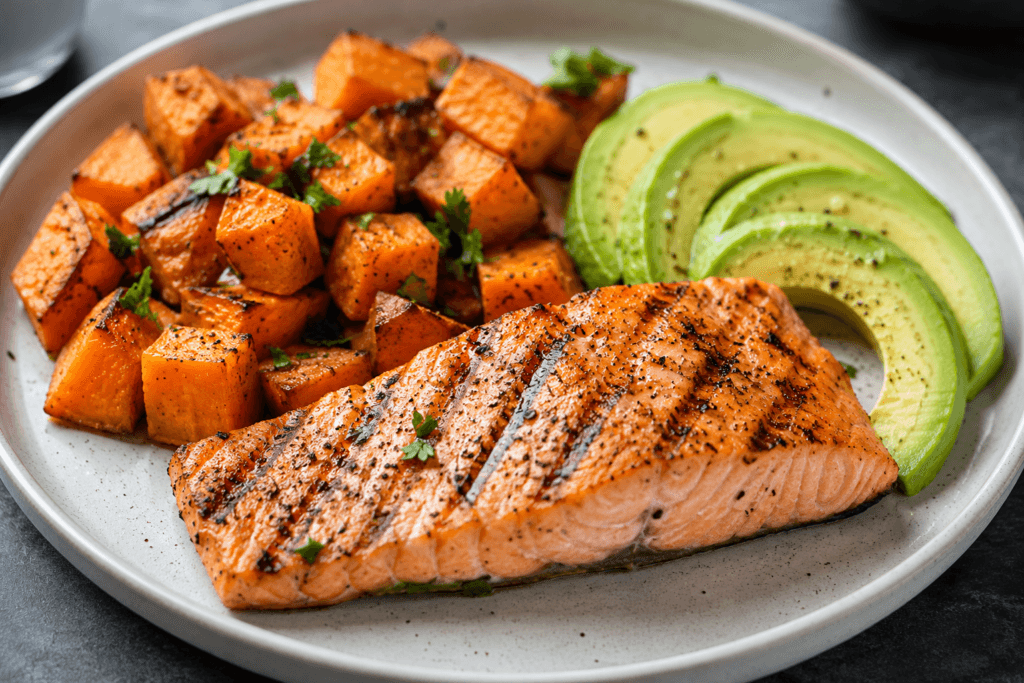
The pre-match meal is about topping up the body’s carb stores, called glycogen. UEFA notes that liver glycogen can drop by about half after an overnight fast, so this meal matters. Typical choices are pasta, rice, potatoes or bread with a lean protein, and the meal should be easy to digest. UEFA’s experts also say comfort matters: players should feel good, not stuffed, so rigid rules come second.
What Do Footballers Eat at Half-Time?
Not a meal. Match rules limit eating to the warm-up and half-time, and many players worry about stomach problems. UEFA recommends about 30 to 60 g of carbs after the warm-up and again at half-time, usually from sports drinks, gels or chews. In hot weather, fluids come first and the carb target drops to about 20 to 50 g.
What Do Footballers Eat After a Match?
Recovery starts at the final whistle. UEFA suggests about 1 g of carbs per kg of body weight per hour for the first 4 hours, with protein at meals. For protein, footballers aim for about 1.6 to 2.2 g per kg per day overall, spread across meals of roughly 0.3 to 0.4 g per kg each. Most players hit that from normal food, and UEFA calls whey protein a sensible choice when a shake is easier than a meal.
What Football Players Limit
- Alcohol. UEFA’s experts say occasional small amounts (up to 2 units a day) aren’t harmful, but alcohol can slow glycogen refueling, muscle repair and rehydration. Heavy drinking can hurt next-day performance and immune function.
- Hard-to-digest food before kickoff. UEFA says the pre-match meal should be easy to digest to avoid problems like reflux and stomach discomfort.
- Unnecessary supplements. UEFA recommends restricting general supplement use because of limited evidence of benefit and safety, and problems with product quality control, with a team doctor or sports nutritionist judging each case.
Supplements Football Players Actually Use
UEFA’s experts say the evidence is stronger for caffeine and creatine than for most other performance supplements. Food still comes first.
Caffeine
The International Society of Sports Nutrition says caffeine improves many types of exercise performance, typically at 3 to 6 mg per kg of body weight taken about 60 minutes before exercise. For a 75 kg adult, that’s about 225 to 450 mg. Higher doses don’t add much and raise the risk of side effects such as jitters and poor sleep, which matters for evening kickoffs. Our guide to healthier energy drinks covers how much caffeine is in popular cans.
Creatine Monohydrate
Check the current price of BulkSupplements Creatine Monohydrate
Creatine is one of the most studied sports supplements. The ISSN position stand on creatine concludes it improves high-intensity exercise performance and training adaptations, and is safe for healthy people at recommended doses. A common daily dose is 3 to 5 g. This one is plain, unflavored creatine monohydrate, the form used in most research, and it has tens of thousands of buyer ratings. For more, see our research on whether creatine gummies are worth it.
Whey Protein (Optional)
Check the current price of Optimum Nutrition Gold Standard Whey
You don’t need a shake if your meals have enough protein. But after a late match or a training session, a whey shake is an easy way to get about 0.3 g of protein per kg. Optimum Nutrition Gold Standard is one of the most-reviewed whey powders. If heavy metals in protein powder worry you, read our research on protein powder without lead.
Electrolyte Drink Mix (for Hot Days and Long Sessions)
Check the current price of Liquid I.V. Hydration Multiplier
Players lose sodium in sweat, and UEFA notes sweat rates vary a lot between players. For long sessions or hot-weather matches, an electrolyte mix can help you drink enough. For a normal hour of exercise in cool weather, water and your next meal are usually enough.
What Amateur Players and Fans Can Copy
You don’t need a club nutritionist. If you play on weekends, the pro basics scale down easily:
- Eat a normal carb-based meal 3 to 4 hours before you play, like pasta, rice or a sandwich, and start the game well hydrated.
- Have a sports drink or a banana at half-time if the game is intense or long.
- Eat a proper meal with carbs and protein after the game, and keep alcohol modest that night.
If you’re watching rather than playing, two habits help most:
- Stand up and move at half-time. In a 2012 study in Diabetes Care, overweight adults who broke up sitting with 2-minute walks every 20 minutes had lower blood sugar and insulin after a meal than when they sat still.
- Go easy on alcohol before bed. A 2013 review of alcohol and sleep found alcohol helps you fall asleep but disrupts the second half of the night and delays REM sleep.
Big games can also be hard on the heart for some fans. See our research on whether watching football can trigger a heart attack.
Thinking about an energy drink before you play or watch? We dug into whether Prime is healthy and whether Celsius is bad for you, including how much caffeine is in each can.
The PrimeDigger Verdict
What do football players eat? Mostly ordinary food, timed well: plenty of carbs around matches, a carb-rich meal 3 to 4 hours before kickoff, quick carbs at half-time, and carbs plus protein after the game. The supplements with the best evidence are caffeine and creatine. If you play yourself, copy the timing, not the hype: a good pre-game meal, a drink at half-time and a proper recovery meal will do more than any capsule.
Want the deeper investigation? Our ebook The Supplement Scam Bible shows how supplement labels, dosage claims and “clinically proven” wording mislead, and which “advanced” forms of creatine are a waste of money. Get the ebook ($19) → See all our ebooks →
This article is for general information, not medical or dietary advice. Teenagers, people with health conditions and anyone taking medication should talk to a doctor or registered dietitian before using supplements or caffeine. Read our Health Disclaimer.
Frequently Asked Questions
What do football players eat on match day?
A carb-rich meal 3 to 4 hours before kickoff, such as pasta, rice or potatoes with lean protein, then about 30 to 60 g of carbs after the warm-up and at half-time from drinks or gels, and a recovery meal with carbs and protein after the match.
How many carbohydrates do football players need?
UEFA experts recommend 6 to 8 g per kg of body weight on the day before, the day of and the day after a match. On lighter training days, 3 to 6 g per kg may be enough.
How many calories do football players eat a day?
In a study of Premier League players, they burned about 3,566 calories a day and ate about 3,789 calories on match days and about 2,956 on training days.
What do footballers eat at half-time?
Usually not food. Most players take about 30 to 60 g of carbs from sports drinks, gels or chews, and focus on fluids in hot weather.
What do footballers eat after a match?
Carbs and protein. UEFA suggests about 1 g of carbs per kg of body weight per hour for 4 hours after the match, with protein at meals of roughly 0.3 to 0.4 g per kg.
Do professional football players use caffeine before a game?
Many do. The International Society of Sports Nutrition says 3 to 6 mg per kg of body weight about 60 minutes before exercise can improve performance. Higher doses add side effects without much extra benefit.
Sources
- Collins et al. (2021), British Journal of Sports Medicine: UEFA expert group statement on nutrition in elite football
- Anderson et al. (2017), International Journal of Sport Nutrition and Exercise Metabolism: Energy intake and expenditure of Premier League players
- Guest et al. (2021), Journal of the International Society of Sports Nutrition: Caffeine and exercise performance
- Kreider et al. (2017), Journal of the International Society of Sports Nutrition: Safety and efficacy of creatine supplementation
- Dunstan et al. (2012), Diabetes Care: Breaking up prolonged sitting reduces glucose and insulin responses
- Ebrahim et al. (2013), Alcoholism: Clinical and Experimental Research: Alcohol and sleep