Reader-supported: we may earn a commission from links on this page.
Quick answer: Looking for a protein powder without lead? Start with whey. In Consumer Reports’ lab tests, the lowest-lead powders were whey-based: Momentous Whey Protein Isolate (30% of CR’s daily lead limit), BSN Syntha-6 (46%) and Optimum Nutrition Gold Standard (56%). Plant-based powders averaged nine times more lead than dairy ones. Most powders are fine now and then. If you use one every day, pick from the low-lead list below.
There’s no federal limit for lead in protein powder, and labels don’t have to tell you how much is inside. So we went through the two biggest independent lab tests, from Consumer Reports and the Clean Label Project, and pulled out what they found, where they agree, and where the scary headlines go too far.
Table of Contents
The Protein Powders That Tested Lowest for Lead
Consumer Reports (CR) tested 23 popular powders and shakes in October 2025, then five more in January 2026. These are the ones it rated fine for daily use, and that you can buy in the US today.
| Product | Type | CR lead result | CR verdict |
|---|---|---|---|
| Momentous Whey Protein Isolate, Vanilla | Whey isolate | 30% of CR’s daily limit | Better choice for daily use |
| BSN Syntha-6, Vanilla Ice Cream | Whey and milk blend | 46% | Better choice for daily use |
| Optimum Nutrition Gold Standard 100% Whey, Chocolate | Whey | 56% | Better choice for daily use |
| Premier Protein Powder | Whey | Low (January 2026 update) | Low levels of lead |
| Truvani Plant-Based Protein, Chocolate | Plant-based | Low (January 2026 update) | Low levels of lead |
| OWYN Pro Elite Shake, Chocolate | Plant-based shake | 88% | Better choice for daily use |
| Dymatize Super Mass Gainer, Gourmet Vanilla | Mass gainer | 25% | Better choice for daily use |
CR’s daily limit is 0.5 micrograms of lead. CR didn’t publish exact numbers for its January additions, only that all five had low levels. Prices and stock change often, so check the current price before you buy.
1. Momentous Whey Protein Isolate: Lowest Lead
Check the current price of Momentous Whey Protein Isolate
The vanilla flavor came in at just 30% of CR’s daily limit, the lowest published result for any regular protein powder in the test. It’s a grass-fed whey isolate with 20 grams of protein per scoop. If lead is your main worry and you drink a shake every day, this is the one the data favors.
2. BSN Syntha-6: Best for Taste and Texture
Check the current price of BSN Syntha-6
Syntha-6 is a blend of whey and milk proteins with 6 grams of fiber, which makes it thicker and creamier than a plain isolate. The Vanilla Ice Cream flavor scored 46% of CR’s limit, and it’s one of the most popular powders we found.
3. Optimum Nutrition Gold Standard: The Best-Known Pick
Check the current price of Optimum Nutrition Gold Standard
This is one of the most popular protein powders we found. CR tested the chocolate flavor at 56% of its limit and rated it a better choice for daily use. If you already use it, the data says you don’t need to switch. CR listed the flavor only as “chocolate”, and we link the brand’s standard Double Rich Chocolate.
4. Premier Protein Powder: 30 Grams per Scoop
Check the current price of Premier Protein Powder
Premier Protein’s powder was one of the five products CR added in January 2026 after reader requests, and all five had low levels of lead. It’s a 100% whey powder with 30 grams of protein per serving.
5. Truvani Plant-Based: Best Plant-Based Protein Powder Without Lead
Check the current price of Truvani Plant-Based Protein
Plant-based powders did worst overall, which makes Truvani the standout. Its chocolate plant protein was in CR’s January group with low lead levels. It’s also certified organic, which is interesting, because the Clean Label Project found organic powders averaged more lead, not less. That’s a good reminder that brand-level testing matters more than any label on the tub.
6. OWYN Pro Elite Shake: Ready-to-Drink, Dairy-Free
Check the current price of OWYN Pro Elite shakes
If you’d rather not mix powders, OWYN’s Pro Elite chocolate shake is dairy-free with 32 grams of protein, and it scored 88% of CR’s limit. That’s just under the line, so it counts as a daily-use option, but it’s not as low as the whey powders above.
7. Dymatize Super Mass Gainer: For Gaining Weight
Check the current price of Dymatize Super Mass Gainer
Mass gainers pack in calories for people trying to bulk up, and their huge servings mean more chances for lead. Dymatize’s Gourmet Vanilla still scored just 25% of CR’s limit per serving. Compare that with the worst product in the whole test, which was also a mass gainer.
Lead in Protein Powder: What the Two Biggest Lab Tests Found
Two independent groups have tested protein powders at scale. Their results line up on the big points, but not on everything.
| Consumer Reports | Clean Label Project | |
|---|---|---|
| When | October 2025, updated January 2026 | January 2025 |
| Products tested | 28 powders and shakes | About 160 products from 70 brands |
| Lead limit used | 0.5 micrograms a day | California Prop 65 limits |
| Headline result | More than two-thirds had more lead in one serving than CR’s daily limit | 47% were above Prop 65 limits for heavy metals |
| Plant vs whey | Plant-based averaged 9 times more lead than dairy | Plant-based averaged 5 times more cadmium than whey |
| Chocolate vs vanilla | No meaningful difference in lead | Chocolate had 110 times more cadmium |
| Organic | Not compared | Organic averaged 3 times more lead than non-organic |
Where they agree: plant-based powders carry more heavy metals than whey, and a lot of popular powders go over strict safety limits. Where they differ: CR found chocolate and vanilla had about the same lead, while the Clean Label Project found chocolate powders had far more cadmium, another toxic metal found in cocoa. Both groups use limits based on California’s Prop 65, which is much stricter than federal guidance (more on that below). Industry groups have called the Clean Label Project report misleading for that reason.
The Protein Powders With the Most Lead
These are the products that scored worst in CR’s test. CR advises avoiding the first two and limiting the next two to about once a week.
| Product | CR lead result | CR verdict |
|---|---|---|
| Naked Nutrition Vegan Mass Gainer, Vanilla | 7.7 micrograms per serving, about 1,570% of CR’s limit | Avoid |
| Huel Black Edition, Chocolate | 6.3 micrograms per serving, about 1,290% | Avoid |
| Garden of Life Sport Organic Plant-Based, Vanilla | About 560% | Limit to once a week |
| Momentous 100% Plant Protein, Chocolate | About 480% | Limit to once a week |
Notice the pattern: all four are plant-based. One more surprise: Equip Foods Prime Protein, a beef protein powder that some guides call “clean”, came in at about 144% of CR’s limit in chocolate. CR rated it fine for occasional use, not daily. The Momentous brand is on both lists, too: its whey isolate tested lowest, while its plant protein was one of the highest. Results belong to products, not brands.
Is Lead in Protein Powder Dangerous? How Worried to Be
It depends on how often you drink it. There’s no federal limit for lead in protein powder. CR uses a very strict daily limit of 0.5 micrograms, based on California’s Prop 65. For comparison, the FDA’s interim reference levels for lead from food are 2.2 micrograms a day for children and 8.8 micrograms a day for women of childbearing age.
- One shake now and then is not the problem. A CR reporter told NPR that most powders are “fine to have occasionally”. The worry is lead building up from daily use over months and years.
- Lead comes from many foods. A daily shake adds to what you already get from your diet, which is why CR’s limit is so strict.
- Industry groups disagree with CR’s approach. The Council for Responsible Nutrition says going over CR’s threshold is not the same as going over a government safety limit.
- Kids and pregnancy need extra care. The FDA’s reference level for children is much lower, and lead is especially harmful to developing brains.
This guide summarizes published lab data. It isn’t medical advice. If you’re pregnant, planning a pregnancy, or thinking of giving protein powder to a child, talk to your doctor first.
Why Does Protein Powder Have Lead?
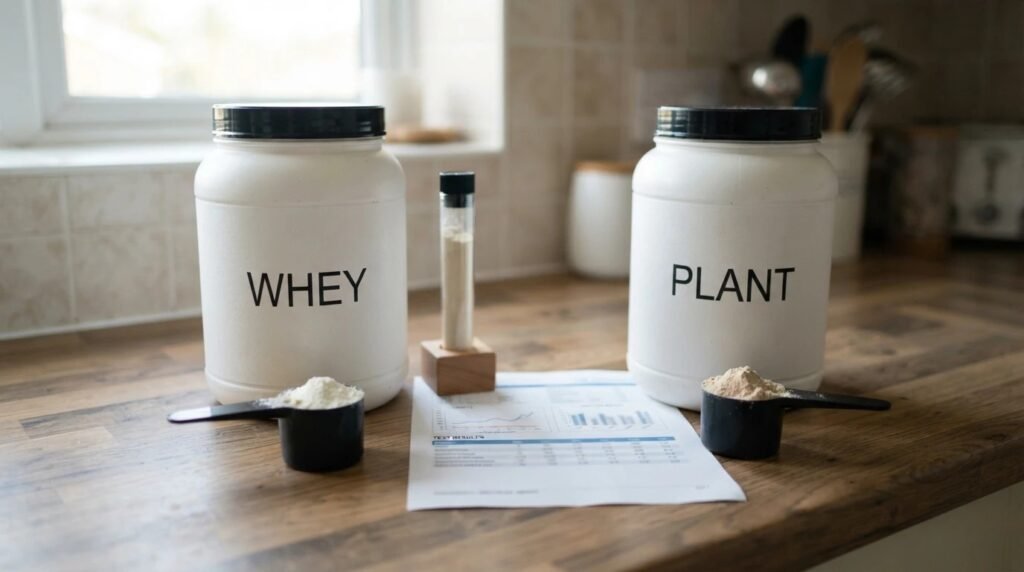
Mostly because of the soil. Plants pull metals like lead and cadmium out of the ground as they grow, and making protein powder concentrates a lot of plant material into one small scoop. That’s why pea, rice and other plant proteins tend to test higher than whey, which comes from milk.
This also explains the organic surprise. “Organic” describes how a crop is farmed, not whether it was tested for heavy metals. Organic crops grown in soil with lead in it can still take that lead up, and in the Clean Label Project’s test, organic powders averaged three times more lead than non-organic ones.
Plant-Based Protein Powder Without Lead: Your Options
If you’re vegan or avoid dairy, you don’t have to give up protein powder, but you do need to choose carefully. In CR’s tests, these plant-based options came out low:
- Truvani Plant-Based Protein, Chocolate: low lead in CR’s January 2026 update.
- OWYN Pro Elite chocolate shake: 88% of CR’s limit, a ready-to-drink option.
Avoid relying on one plant-based powder every day unless the brand publishes recent heavy-metal results for the exact product. Rotating between a low-lead powder and whole-food protein lowers your exposure further.
How to Choose a Low-Lead Protein Powder
- Pick whey over plant-based if you can have dairy. Both lab tests found far fewer heavy metals in whey.
- Choose a product that has actually been tested, like the ones in our table. “Clean”, “natural” and “organic” on the label don’t tell you anything about lead.
- Look for published results. Some brands share heavy-metal test results for each batch. If a brand won’t, that’s worth noticing.
- Don’t double the scoop just because the tub says you can. Lead results are per serving, so two scoops means twice the lead.
- Get most of your protein from food. CR says no protein powder is necessary to hit your protein goals. Greek yogurt, eggs, fish, meat, beans and lentils all count.
The PrimeDigger Verdict
Protein powder isn’t poison, but it’s not as clean as the labels suggest either. If you drink a shake every day, choose one with published test results, and whey has the edge: Momentous Whey Protein Isolate had the lowest published lead result of any regular powder in CR’s test, and Optimum Nutrition Gold Standard is a safe, popular pick. If you’re plant-based, Truvani is the option with low results. Whatever you choose, keep it to one scoop and get most of your protein from food.
Taking creatine too? Labels can be just as unreliable there: in two public lab tests, 10 of 18 creatine gummies failed their label claims. See which creatine gummies passed.
More from our wellness investigations: the healthiest cooking oils, ranked, the best oil to fry eggs, what the research says about creatine for women in menopause, the best creatine for women, including which gummies failed lab tests, and whether Prime is healthy, from its labels to its lawsuits.
Want the full picture? Our ebook The Kitchen Truth Bible covers heavy metals in protein powder, dark chocolate, rice and baby food, plus which cooking oils to trust and how to read a label in two minutes. Get the ebook ($19) → Using protein to build strength after 40? See The Women’s Strength Bible. See all our ebooks →
Frequently Asked Questions
Which protein powder has the least lead?
In Consumer Reports’ tests, Momentous Whey Protein Isolate in vanilla had the lowest published lead result of any regular protein powder, at 30% of CR’s daily limit. BSN Syntha-6 and Optimum Nutrition Gold Standard also scored low. A MuscleTech mass gainer had no detectable lead.
Is lead in protein powder dangerous?
An occasional shake is unlikely to be a problem. The concern is daily use over months and years, because lead builds up in the body. Consumer Reports’ limit of 0.5 micrograms a day is much stricter than the FDA’s interim reference levels of 2.2 micrograms for children and 8.8 micrograms for women of childbearing age.
Does whey protein have lead?
Usually much less than plant protein. Consumer Reports found plant-based powders averaged nine times more lead than dairy-based ones like whey. Some whey products still went over CR’s limit, so the exact product matters.
Is organic protein powder safer?
Not for heavy metals. In the Clean Label Project’s test of about 160 products, organic protein powders averaged three times more lead than non-organic ones. Organic describes how crops are farmed, not whether they were tested for metals.
Does Optimum Nutrition Gold Standard have lead?
Consumer Reports found some, but a low amount. The chocolate flavor scored 56% of CR’s daily limit, and CR rated it a better choice for daily use.
Does Premier Protein powder have lead?
Premier Protein’s powder was one of five products Consumer Reports tested in January 2026, and CR said all five had low levels of lead.
Is Huel safe?
Huel Black Edition in chocolate had 6.3 micrograms of lead per serving in Consumer Reports’ test, about 1,290% of CR’s daily limit, and CR advises avoiding it for daily use. CR did not test every Huel product.
Sources
- Consumer Reports: Protein Powders and Shakes Contain High Levels of Lead (October 2025, updated January 2026)
- Clean Label Project: Protein Powder Study
- CNN: Lead and cadmium found in muscle-building protein powders, report says
- NPR: A study found lead in popular protein powders. Here’s why you shouldn’t panic
- NutraIngredients: Clean Label Project report and its critics