Reader-supported: we may earn a commission from links on this page.
Quick answer: Beef tallow can work as a rich, simple moisturizer for very dry skin, like cracked heels, elbows and dry patches. That’s about all the evidence supports. We couldn’t find any clinical trial of plain beef tallow on skin, and dermatologists warn it can clog pores, so people with acne-prone, oily or sensitive skin should skip it on the face. The popular claim that tallow is packed with vitamins A, D, E and K doesn’t hold up: USDA data shows rendered beef tallow has no vitamin A or K at all.
Table of Contents
Is Beef Tallow Good for Your Skin?
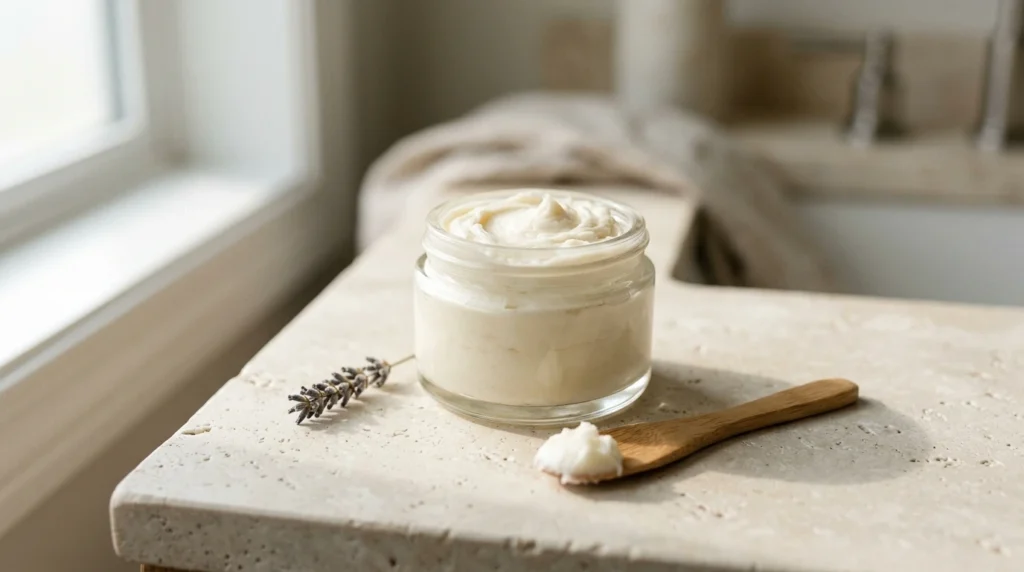
It can be, for some people, in a limited way. Tallow is rendered beef fat, and like any thick fat it sits on top of the skin and slows water loss. That makes it a basic moisturizer. What’s missing is proof that it does anything more. We searched for clinical trials of plain beef tallow on human skin and couldn’t find one.
Dermatologists say the same. In a January 2026 article from Scripps Health, dermatologist Dr. E. Victor Ross explained that tallow lacks the testing and regulation of dermatologist-recommended moisturizers, and that its popularity comes from wellness trends rather than strong science. He said a small amount may be fine for people with really dry skin and no history of breakouts.
What’s Actually in Beef Tallow?
Here is what USDA nutrition data shows for 100 grams of rendered beef tallow:
| Component | Per 100 g | What it means for skin |
|---|---|---|
| Saturated fat | 49.8 g (mostly palmitic and stearic acid) | Makes tallow solid and heavy |
| Monounsaturated fat | 41.8 g (mostly oleic acid) | Softens and spreads on skin |
| Polyunsaturated fat | 4.0 g (linoleic acid 3.1 g) | Very little |
| Vitamin E | 2.7 mg | Small amount |
| Vitamin D | 0.7 mcg | Trace |
| Vitamin A | 0 | None |
| Vitamin K | 0 | None |
The Vitamin Claims Don’t Hold Up
Many tallow balms are sold as rich in vitamins A, D, E and K. The USDA figures above list zero vitamin A and zero vitamin K in rendered tallow, a trace of vitamin D and a small amount of vitamin E. A balm made with other oils may add some vitamin E, but the tallow itself isn’t the vitamin source the labels suggest. And you only rub a fingertip of balm onto your skin, so the amounts are tiny either way.
Is Tallow Really Like Your Skin’s Own Oil?
Only partly. Your skin’s oil, called sebum, is a mix. A 2009 review of sebaceous gland lipids puts it at about 57.5% triglycerides and fatty acids, 26% wax esters, 12% squalene and 4.5% cholesterol and its esters. Tallow is almost all triglycerides. It shares some fatty acids with sebum, but it has none of the wax esters or squalene, so “just like your skin’s natural oil” is a marketing shortcut.
Beef Tallow for Your Face: Who It Suits and Who Should Skip It
| Your skin | Beef tallow? |
|---|---|
| Very dry skin, no history of breakouts | May be fine in small amounts |
| Cracked heels, elbows, hands | A reasonable, cheap option |
| Acne-prone or oily skin | Skip it on the face |
| Sensitive skin, rosacea or seborrheic dermatitis | Skip it |
| Active breakouts or recently treated skin | Skip it |
The “skip it” rows follow the Scripps guidance. Tallow is heavy and occlusive, which is why it helps very dry skin and why it can clog pores on oily skin.
Does Beef Tallow Help Wrinkles, Eczema or Acne?
- Wrinkles: we found no study showing tallow reduces wrinkles. Any good moisturizer can make fine lines look softer for a while by plumping dry skin, and tallow is no exception, but that isn’t anti-aging.
- Eczema: Scripps notes some people with eczema or very dry skin may get short-term relief, but urges caution. Eczema skin is easily irritated, so a tested, fragrance-free eczema moisturizer is the safer first choice. Talk to your doctor before swapping.
- Acne: tallow is more likely to make acne worse than better, because it can clog pores.
What about the dramatic “before and after” photos? They aren’t controlled tests. Lighting, angles, filters and other products all change how skin looks, so they can’t tell you what tallow did.
Tallow and Honey Balm: Does the Honey Help?
Honey draws in moisture and has a long history in wound care, which is why it shows up in many tallow balms. But we couldn’t find any study testing tallow-and-honey balms on skin, and the honey in a jar of balm isn’t the medical-grade honey used on wounds. Treat it as a nice extra, not a reason to pay more.
How to Use Beef Tallow on Your Skin Safely
- Patch test first. Put a small amount on one spot for a day or two and watch for redness, itching, burning or bumps, as Scripps advises. Stop if any appear.
- Start with dry areas, like heels, elbows and hands, before trying it on your face.
- Use very little. A pea-sized amount warmed between your fingers covers a lot of skin.
- Check the smell and the label. Fat can spoil, and Scripps warns that many small-brand products aren’t tested for microbes or stability. Throw out a jar that smells off.
- Pick unscented. Fragrance is a common cause of irritation, and it adds nothing to a moisturizer.
The Best Beef Tallow Balms We Found
If you want to try tallow, keep it simple: unscented, a short ingredient list, and a brand that says where its tallow comes from. These three are popular, well-reviewed balms that fit. We list the ingredients as each maker states them.
| Balm | Main ingredients (per the maker) | Best for |
|---|---|---|
| Hearth & Homestead Whipped Tallow, Unscented | Grass-fed tallow, olive oil infused with calendula and rose | Most people starting out |
| Terra Lotus Tallow Balm with Raw Honey, Unscented | Grass-fed tallow, olive oil, beeswax, raw honey | Very dry hands, heels and elbows |
| ZIIDII Whipped Tallow Balm, Unscented | Grass-fed tallow, olive oil, jojoba oil, shea butter | A lower-cost first jar |
Prices and stock change often, so check the current price before you buy. None of these balms has been tested in a clinical trial, so patch test first.
The PrimeDigger Verdict
Beef tallow is a heavy, old-fashioned moisturizer, not a skincare miracle. It may help very dry skin and rough spots, and it’s fine to try if your skin rarely breaks out. If you’re acne-prone, oily or sensitive, keep it off your face. Ignore the vitamin claims, patch test first, and choose an unscented balm with a short ingredient list.
Thinking of cooking with it too? Read our research on whether beef tallow is healthy to eat.
Frequently Asked Questions
Is beef tallow good for your skin?
It can work as a simple, rich moisturizer for very dry skin. We found no clinical trial of plain beef tallow on skin, and dermatologists say people with acne-prone, oily or sensitive skin should avoid it on the face.
Does beef tallow clog pores?
It can. Tallow is heavy and occlusive, and dermatologists warn that people with acne-prone or oily skin are more likely to get clogged pores or breakouts from it.
Does beef tallow have vitamins A, D, E and K?
Not much. USDA data for rendered beef tallow lists no vitamin A and no vitamin K, a trace of vitamin D and a small amount of vitamin E.
Can I put beef tallow on my face every day?
If your skin is very dry and you rarely break out, a small daily amount may be fine after a patch test. Stop if you see redness, itching or new bumps.
Is beef tallow good for eczema?
Some people with eczema report short-term relief, but there’s no good evidence for it. A tested, fragrance-free eczema moisturizer is the safer first choice, so ask your doctor before switching.
Sources
- Scripps Health (2026): Beef tallow for skin care, what dermatologists want you to know
- USDA FoodData Central: Fat, beef tallow
- Picardo et al. (2009), Dermato-Endocrinology: Sebaceous gland lipids
This article is for general information, not medical advice. If you have a skin condition or take medication, talk to your doctor first. Read our Health Disclaimer.