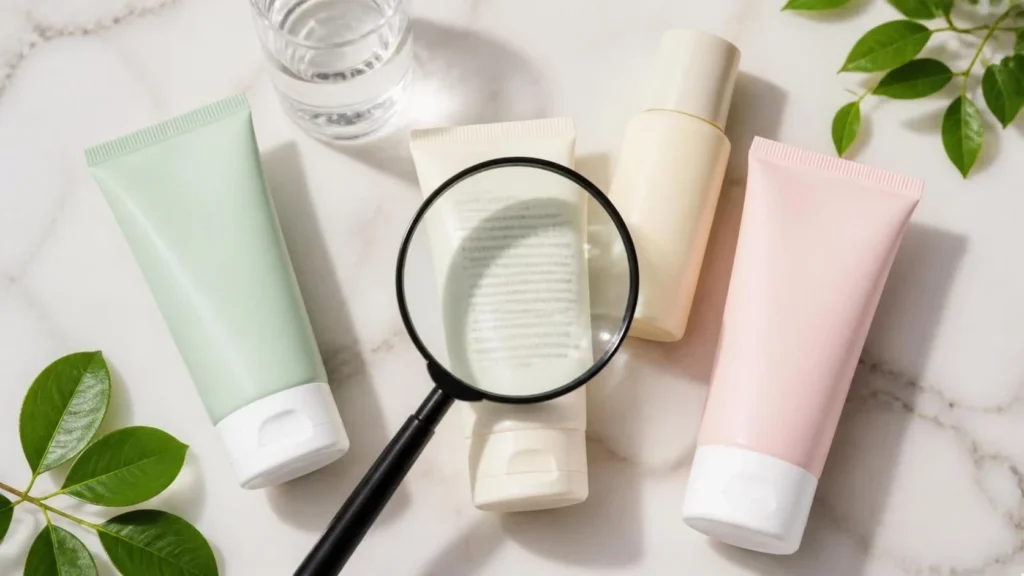
Quick answer: Korean sunscreens are loved for light, no-white-cast textures, but what you buy in the US isn’t always what’s sold in Korea. Here, sunscreens are regulated as drugs and must use FDA-allowed UV filters. We checked 20 Korean sunscreens on the largest US online store on October 17, 2026: 11 listed only US-allowed filters, 1 listed Korean filters that aren’t allowed in US sunscreens, and 8 didn’t list their UV filters at all. Our top picks with clearly listed filters are the Abib Airy Sunstick and the COSRX Vitamin E Sunscreen, and for mineral, the AXIS-Y Complete No-Stress Physical Sunscreen.
Reader-supported: we may earn a commission from links on this page. As an Amazon Associate we earn from qualifying purchases.
Part of our K-beauty investigations: see how Korean sunscreens compare with 5 viral K-beauty products in our Korean skincare scorecard.
Table of Contents
Key Findings: 20 Korean Sunscreens
- 11 of 20 Korean sunscreens listed only UV filters allowed in US sunscreens, such as avobenzone, homosalate, octisalate or zinc oxide.
- 1 of 20 listed Korean UV filters that aren’t on the US list (diethylamino hydroxybenzoyl hexyl benzoate, ethylhexyl triazone and polysilicone-15). It was sold by a third-party seller.
- 8 of 20 didn’t list their UV filters anywhere in the listing text, including both Beauty of Joseon products we checked.
- The top search result for “Beauty of Joseon sunscreen” was sold by a seller named “Baety Jeosn,” not Beauty of Joseon’s official store.
- 4 of 20 used the Korean “PA++++” rating, which isn’t part of US sunscreen labels.
Why UV Filters Matter: US Rules vs Korean Rules
A UV filter is the ingredient that actually blocks the sun. The US and Korea allow different ones:
- In the US, sunscreens are drugs. The FDA says “in the United States, sunscreens are regulated as drugs,” so they must use filters on the FDA’s list and carry a Drug Facts label.
- The US list is short. According to the FDA’s sunscreen Q&A, it includes zinc oxide, titanium dioxide and chemical filters like avobenzone, homosalate, octisalate and octocrylene. FDA has asked for more data on 12 of those chemical filters, and says that “does not represent a conclusion” that they’re unsafe.
- Korea allows newer filters. Ingredients like diethylamino hydroxybenzoyl hexyl benzoate (Uvinul A Plus) and ethylhexyl triazone are common in Korean formulas but aren’t on the US list.
- One just changed. The FDA added bemotrizinol (Tinosorb S) on June 10, 2026, the first new US sunscreen filter in more than 20 years. Companies could start using it in US products from August 9, 2026.
What this means for you: many Korean brands now make US versions that use US filters. They can feel different from the Korean originals people rave about online. Neither is “fake,” but they aren’t the same product.
The Data: What Each Listing Says
| Sunscreen (as listed) | Filters stated in the listing | Label style |
|---|---|---|
| Abib Airy Sunstick SPF50+ | Avobenzone, homosalate, octisalate, octocrylene | Broad Spectrum, Drug Facts |
| COSRX Vitamin E Sunscreen SPF 50 | Avobenzone, homosalate, octisalate, octocrylene | Drug Facts |
| ISNTREE Hyaluronic Acid Daily Sun Gel SPF 30 | Avobenzone, homosalate, octisalate | Broad Spectrum, Drug Facts |
| ROUND LAB Birch Juice UV LOCK SPF 45 | Avobenzone, homosalate, octisalate | Broad Spectrum, Drug Facts |
| SOME BY MI V10 Hyal Air Fit SPF 50 | Avobenzone, homosalate, octisalate, octocrylene | Broad Spectrum |
| mixsoon Bean Sunscreen SPF 50 | Avobenzone, homosalate, octisalate, octocrylene | Not stated |
| Dr.G Bright Toning Up SPF 45 | Zinc oxide, ethylhexyl salicylate, homosalate | Broad Spectrum |
| AXIS-Y Complete No-Stress Physical V3 | Zinc oxide | Broad Spectrum, mineral |
| Haruharu Black Rice Pure Mineral | Zinc oxide | Broad Spectrum and PA++++ |
| SKIN1004 Centella Air-fit Suncream Light | Zinc oxide | PA++++, mineral |
| MISSHA All Around Vita C SPF 50 | Zinc oxide | Not stated |
| ROUND LAB Birch Juice Sun Stick SPF 50+ | Uvinul A Plus, ethylhexyl triazone, polysilicone-15 (not US-allowed) | Broad Spectrum |
| SKIN1004 Hyalu-Cica Water-Fit Sun Serum | Not listed | Broad Spectrum |
| ROUND LAB Birch Juice Sun Serum SPF 50 | Not listed | PA++++ |
| Anua Zero-Cast Moisturizing Sunscreen SPF 50 | Not listed | Not stated |
| Anua Heartleaf Silky Moisture Mild SPF 50+ | Not listed | Broad Spectrum |
| PURITO Sunscreen SPF 50 | Not listed (mentions Drug Facts) | Broad Spectrum |
| MISSHA Glow Weightless Priming SPF 50 | Not listed | Broad Spectrum |
| Beauty of Joseon Dayscreen SPF 30 (official store) | Not listed | Not stated |
| “Relief Sun Organic” SPF50+ (sold by “Baety Jeosn”) | Not listed | PA++++ |
What About Beauty of Joseon Sunscreen?
Beauty of Joseon’s Relief Sun is one of the most talked-about Korean sunscreens, and “Beauty of Joseon sunscreen” gets about 74,000 US searches a month. Here’s what we found:
- The official store sells a US product called Dayscreen Moisturizer Sunscreen SPF 30, a different name and SPF from the Korean Relief Sun.
- The top search result for “Beauty of Joseon sunscreen” was a “Relief Sun Organic” listing with a Korean-style “SPF50+, PA++++” label, sold by a seller named “Baety Jeosn.” Its title didn’t include the brand name, and it didn’t list its UV filters.
- Our advice: if you want Beauty of Joseon, buy from the official Beauty of Joseon store and check the Drug Facts on the box.
Our Picks: The Best Korean Sunscreens
We only picked sunscreens whose listings state their UV filters, use filters allowed in US sunscreens, and are sold by the brand’s official store.
| Pick | Best for | Filters (per listing) |
|---|---|---|
| Abib Airy Sunstick SPF50+ | Reapplying over makeup, oily skin | Avobenzone, homosalate, octisalate, octocrylene |
| COSRX Vitamin E Sunscreen SPF 50 | Everyday, oily skin | Avobenzone, homosalate, octisalate, octocrylene |
| AXIS-Y Complete No-Stress Physical V3 | Sensitive skin, mineral fans | Zinc oxide |
| ISNTREE Hyaluronic Acid Daily Sun Gel SPF 30 | Dry skin | Avobenzone, homosalate, octisalate |
| mixsoon Bean Sunscreen SPF 50 | Dewy finish | Avobenzone, homosalate, octisalate, octocrylene |
Best Stick: Abib Airy Sunstick
The Abib Airy Sunstick is one of the most-reviewed Korean sunscreens in our check, with nearly 7,000 ratings. It’s a semi-matte stick for oily skin, sold by Abib’s official store, with a Broad Spectrum SPF 50+ label and US filters listed: avobenzone, homosalate, octisalate and octocrylene. A stick makes reapplying easy, but swipe several times to get enough on.
Check the current price of the Abib Airy Sunstick
Best Everyday Lightweight: COSRX Vitamin E Sunscreen
The COSRX Vitamin E Sunscreen is a natural-glow SPF 50 for oily skin from COSRX’s official store, with more than 5,000 ratings. Its listing names its US filters, including avobenzone, homosalate and octisalate, and mentions a Drug Facts label.
Check the current price of the COSRX Vitamin E Sunscreen
Best Mineral: AXIS-Y Complete No-Stress Physical Sunscreen
If you prefer mineral sunscreen, the AXIS-Y Complete No-Stress Physical Sunscreen V3 uses zinc oxide and is sold by the official AXIS-Y store. Mineral filters sit on the skin and are often recommended for sensitive skin, though they can leave more of a tint or white cast.
Check the current price of the AXIS-Y Physical Sunscreen
Best for Dry Skin: ISNTREE Hyaluronic Acid Daily Sun Gel
The ISNTREE Hyaluronic Acid Daily Sun Gel is a watery SPF 30 gel with hyaluronic acid, from ISNTREE’s official store. Its listing shows Broad Spectrum and Drug Facts with avobenzone, homosalate and octisalate. SPF 30 meets the FDA’s advice of at least SPF 15.
Check the current price of the ISNTREE Sun Gel
Best Dewy Finish: mixsoon Bean Sunscreen
The mixsoon Bean Sunscreen is a lightweight SPF 50 with more than 3,500 ratings, sold by mixsoon’s store. Its listing names avobenzone, homosalate, octisalate and octocrylene.
Check the current price of the mixsoon Bean Sunscreen
PA++++ vs Broad Spectrum: What the Labels Mean
| Label | Where it’s used | What it tells you |
|---|---|---|
| SPF | Everywhere | Protection from UVB, the rays that cause sunburn |
| PA+ to PA++++ | South Korea, Japan | UVA protection rating; more plus signs, more UVA protection |
| Broad Spectrum | United States | Passed the FDA’s UVA test, so it protects against UVA and UVB |
| Drug Facts | United States | The required US label listing active ingredients and directions |
If a sunscreen sold in the US only shows “PA++++” and no “Broad Spectrum” or Drug Facts, it may be a Korean-market version. That doesn’t make it unsafe, but it wasn’t labeled under US rules.
How to Check a Korean Sunscreen Before You Buy
- Check the seller. Buy from the brand’s official store, and watch for misspelled seller or brand names.
- Look for the filters. A good listing names its active ingredients. If it doesn’t, look at the Drug Facts photo.
- Look for “Broad Spectrum” and SPF 15 or higher, as the FDA recommends.
- Use enough and reapply. The FDA says to reapply at least every two hours, more often if you’re swimming or sweating, and that there’s no such thing as “waterproof” sunscreen.
More from our wellness investigations: non-toxic perfume and beef tallow for skin.
How We Did This
- On October 17, 2026, we searched the largest US online store for Korean sunscreens and 15 popular Korean sunscreen brands, with a New York delivery address, and recorded 20 products.
- For each one, we read only the product’s own title, bullet points, details and brand content (not ads for other products on the page) and recorded any UV filters, label style and seller.
- We did not lab-test SPF or check physical boxes. A filter that isn’t in the listing may still be on the packaging.
- For the rules, we used the FDA’s sunscreen Q&A (current as of September 10, 2026) and consumer page (current as of October 16, 2026), plus Healio’s report on bemotrizinol.
Use this data: journalists and bloggers are welcome to use the table. Please credit PrimeDigger and link to this page.
Frequently Asked Questions
Are Korean sunscreens legal in the US?
Buying one for yourself isn’t illegal, but in the US sunscreens are regulated as drugs, so a sunscreen sold here must use FDA-allowed UV filters and carry a Drug Facts label. Many Korean brands sell US versions made to those rules, which can differ from the versions sold in Korea.
Are Korean sunscreens better than American ones?
Korean sunscreens are popular for their light textures and lack of white cast, partly because Korea allows UV filters the US hasn’t approved. But the US versions sold here must use US-allowed filters. Texture is a preference; protection depends on SPF, broad spectrum and using enough.
Why do some Korean sunscreens say PA++++?
PA is a UVA rating used in South Korea and Japan, with more plus signs meaning more UVA protection. US labels don’t use PA. They say “Broad Spectrum” instead, which means the product passed the FDA’s UVA test.
What is bemotrizinol?
Bemotrizinol, also known by the trade name Tinosorb S, is a UV filter long used in Korean and European sunscreens. The FDA added it to the US sunscreen rules on June 10, 2026, the first new US sunscreen filter in more than 20 years.
Is Beauty of Joseon sunscreen FDA approved?
The FDA doesn’t approve individual sunscreens sold under its rules; they must use allowed filters and follow the labeling rules. Beauty of Joseon’s official store sells a US product called Dayscreen. In our check, the top search result for “Beauty of Joseon sunscreen” was sold by a different seller, so buy from the official store.
How much Korean sunscreen should I use?
The same as any sunscreen: enough to cover all exposed skin, reapplied at least every two hours, or more often if you swim or sweat, according to the FDA.
Sources
- FDA: Questions and Answers on FDA’s Regulatory Actions on Over-the-Counter Sunscreen (current as of September 10, 2026)
- FDA: Sunscreen: How to Help Protect Your Skin from the Sun (current as of October 16, 2026)
- Healio: FDA finalizes action on bemotrizinol (June 9, 2026)
- Product listings for each sunscreen, checked October 17, 2026