Reader-supported: we may earn a commission from links on this page.
Beef tallow is back. Steak ‘n Shake switched its fries to tallow in early 2025, the new federal dietary guidelines name it as a cooking fat, and social media calls it a healthy swap for “toxic” seed oils. So is beef tallow healthy, or is this an old fat with new marketing?
We read the official 2025-2030 Dietary Guidelines, the USDA nutrition data, the clinical trials and the largest research review on saturated fat, and checked the most popular tallow jars.
We research, we don’t lab-test. Everything below comes from the studies and official sources listed at the end, checked in October 2026.
In this guide:
- The Short Answer
- What Is Beef Tallow?
- What the New Dietary Guidelines Actually Say
- Beef Tallow Nutrition vs. Butter and Oils
- Does Beef Tallow Raise Cholesterol? What Studies Found
- Beef Tallow vs. Seed Oils
- Cooking With Beef Tallow
- What About Beef Tallow for Skin?
- The Best Beef Tallow for Cooking: Our Picks
- Who Should Limit Beef Tallow
- Our Verdict
- Frequently Asked Questions
The Short Answer
Beef tallow isn’t a health food, but it isn’t poison either. It’s about half saturated fat, and trials show it raises LDL (“bad”) cholesterol compared with olive oil, though less than butter. The new dietary guidelines allow it, but they still put olive oil first and keep the 10% saturated fat limit. Use tallow now and then for flavor, like searing or roasting potatoes, and keep olive oil as your everyday fat.
What Is Beef Tallow?
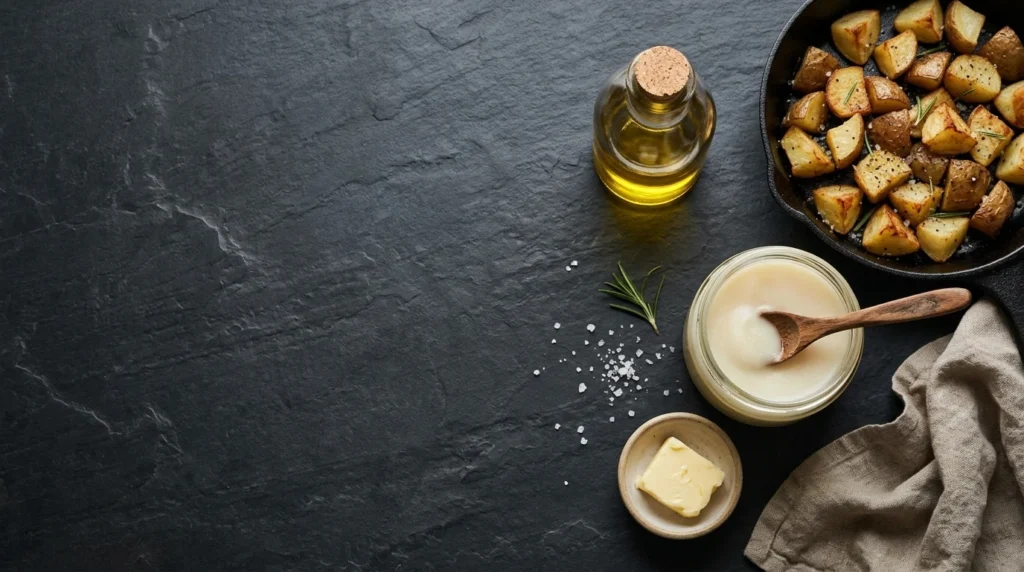
Beef tallow is rendered beef fat. It’s usually made by slowly melting suet, the firm fat around a cow’s kidneys, then straining out the bits. The result is a creamy white fat that’s solid at room temperature and liquid when hot. Cooks use it for frying and roasting, and it’s also used in soap, candles and, lately, skin balms.
For decades, health advice turned people away from saturated animal fats, and restaurants moved to vegetable oils. Now tallow is making a comeback, driven by the backlash against seed oils.
What the New Dietary Guidelines Actually Say
A lot of posts claim the government now calls tallow healthy. Here’s the actual wording in the Dietary Guidelines for Americans, 2025-2030:
“When cooking with or adding fats to meals, prioritize oils with essential fatty acids, such as olive oil. Other options can include butter or beef tallow.”
Right after that, the guidelines add two points the viral posts leave out:
- “In general, saturated fat consumption should not exceed 10% of total daily calories.”
- “More high-quality research is needed to determine which types of dietary fats best support long-term health.”
So tallow is allowed, not recommended first. On a 2,000-calorie diet, 10% is about 22 grams of saturated fat a day. One tablespoon of tallow has about 6.4 grams, nearly a third of that. The American Heart Association is stricter, at about 6% of calories (around 13 grams), so one tablespoon is almost half of its daily limit.
Beef Tallow Nutrition vs. Butter and Oils
Here’s how tallow compares with other common cooking fats, using USDA FoodData Central figures:
| Fat (per 100 g) | Saturated | Monounsaturated | Polyunsaturated | Cholesterol |
|---|---|---|---|---|
| Beef tallow | 49.8 g | 41.8 g | 4.0 g | 109 mg |
| Butter (unsalted)* | 50.5 g | 23.4 g | 3.0 g | 215 mg |
| Lard | 39.2 g | 45.1 g | 11.2 g | 95 mg |
| Olive oil | 13.8 g | 73.0 g | 10.5 g | 0 mg |
| Avocado oil | 11.6 g | 70.6 g | 13.5 g | 0 mg |
| Canola oil | 7.4 g | 63.3 g | 28.1 g | 0 mg |
A few things stand out. Tallow is about half saturated fat, close to butter and well above the plant oils. Most of the rest is monounsaturated fat, the same type olive oil is rich in. One tablespoon has about 115 calories.
What about the vitamins influencers mention? Tallow does contain vitamins D and E, but only in tiny amounts: about 0.1 micrograms of vitamin D per tablespoon, under 1% of the daily value. A Cleveland Clinic dietitian put it plainly: tallow isn’t a recommended source of any nutrient.
Does Beef Tallow Raise Cholesterol? What Studies Found
This is the core of the “is beef tallow bad for you” question, and three pieces of evidence matter most:
| Study | What they did | What they found |
|---|---|---|
| Denke and Grundy, 1991 | 10 men ate liquid diets with 40% of calories from one fat, 3 weeks each | LDL was highest on butter fat, a bit lower on tallow, and lowest on olive oil |
| Cochrane review, 2020 | 15 trials, 56,675 people; long-term trials cut saturated fat for at least 2 years | 17% fewer heart attacks, strokes and other cardiovascular events; little or no effect on deaths |
| Harvard Health, 2026 | Nutrition expert Walter Willett on the current evidence | Randomized trials show tallow raises LDL; olive and seed oils improve cholesterol |
The 1991 trial explains the nuance. About a fifth of tallow is stearic acid (18.9 grams per 100 grams, says the USDA), a saturated fat that raises cholesterol less than others. That’s likely why tallow came out ahead of butter. But olive oil still beat it clearly.
The bigger review points the same way: people who cut saturated fat, and replaced it with plant oils or starchy foods, had fewer cardiovascular events. It found little effect on total deaths, which is one reason the debate continues and the new guidelines call for more research.
Beef Tallow vs. Seed Oils
Tallow’s comeback is tied to the fight over seed oils like canola, soybean and sunflower oil. Critics, including Health Secretary Robert F. Kennedy Jr., blame them for inflammation and chronic disease. But Harvard’s Walter Willett points to “dozens of randomized trials on canola oil alone” showing better cholesterol, and says seed oils don’t increase inflammation.
The real problem is usually what’s fried in the oil. Fries cooked in tallow are still fries. For the full breakdown, our guide to the healthiest cooking oils covers the seed oil debate and which oils hold up best under heat.
Beef tallow vs. butter
Their fat is similarly saturated, but tallow has about half the cholesterol and no milk solids, so it doesn’t burn as easily. In the 1991 trial, tallow raised LDL slightly less than butter fat. Neither is an everyday cooking fat if you’re watching your heart.
Beef tallow vs. olive oil
Olive oil wins on health. It has about a quarter of the saturated fat, one of the strongest research records of any cooking fat, and it’s the oil the new guidelines name first. Tallow wins on flavor for some dishes, like roasted potatoes or seared steak.
Cooking With Beef Tallow
Tallow’s smoke point is usually listed at about 400°F, so it handles searing, roasting and frying. Here’s how cooks use it:
- Frying: keep it around 350 to 375°F. If the fat darkens, smokes or smells sharp, it’s too hot.
- Roasting: toss potatoes or root vegetables in a spoonful of melted tallow for a crisp, savory crust.
- Searing: a thin layer in a hot cast-iron pan works well for steak.
- Storage: keep the jar sealed in a cool cupboard or the fridge, and use a clean spoon each time.
Smoke point isn’t the whole story, though: how stable a fat stays under heat matters more, and extra virgin olive oil holds up better than many people think. If you’re cooking breakfast, see our research on the healthiest oil to fry eggs in.
Comparing tallow with peanut, canola or olive oil for frying? See our guide to the best oil for frying, with USDA smoke points and tips for reusing oil safely.
What About Beef Tallow for Skin?
Tallow balms are a big trend, but doctors are cautious. An MD Anderson dermatologist says tallow is occlusive and comedogenic, meaning it can clog pores and cause acne, and she wouldn’t put it on her face. It also lacks ceramides, which help repair the skin barrier. It may help very dry skin on the body, but if you’re prone to breakouts, a dermatologist-recommended moisturizer is the safer bet.
We dug into the skin claims in a separate guide: beef tallow for skin, including the vitamin myth and who should skip it on the face.
The Best Beef Tallow for Cooking: Our Picks
If you want to cook with tallow, these are well-reviewed options with simple single-ingredient labels, based on maker information and the listings as of October 10, 2026. Check the current price and reviews before you buy.
| Product | Source | Size | Best for |
|---|---|---|---|
| Fatworks Grass-Fed Beef Tallow (2-pack) | 100% grass-fed, grass-finished beef suet | 14 oz jar, 2-pack | Most people |
| Kettle & Fire 100% Grass-Fed Beef Tallow | Grass-fed, grass-finished cattle | 14 oz glass jar | A single jar |
| South Chicago Packing Wagyu Beef Tallow (jar) | Wagyu beef fat | 11.5 oz glass jar | Trying tallow |
| South Chicago Packing Wagyu Beef Tallow (42 oz tub) | Wagyu beef fat | 42 oz tub | Frying |
1. Fatworks Grass-Fed Beef Tallow: Best for Most People
The Fatworks Grass-Fed Beef Tallow (2-pack) is made from the suet of 100% grass-fed, grass-finished cattle from U.S. family ranches, according to its listing, with no preservatives. It was sold by Fatworks itself and had a 4.6-star average from about 1,700 ratings when we checked.
2. Kettle & Fire 100% Grass-Fed Beef Tallow: Best Single Jar
The Kettle & Fire 100% Grass-Fed Beef Tallow comes in one 14 oz glass jar from grass-fed, grass-finished cattle. It’s newer, with a 4.7-star average from about 145 ratings when we checked, and it was sold by Kettle & Fire.
3. South Chicago Packing Wagyu Beef Tallow: Best for Frying
South Chicago Packing is the most-reviewed tallow we found. Its 42 oz Wagyu Beef Tallow tub had a 4.7-star average from nearly 20,000 ratings, and the 11.5 oz glass jar is a smaller way to try it. The listing says Wagyu, not grass-fed, so pick Fatworks or Kettle & Fire if that matters to you.
One honest note: grass-fed labels tell you how the cattle were raised. They don’t change the basic fact that tallow is about half saturated fat.
Who Should Limit Beef Tallow
- People with high LDL cholesterol or heart disease. Saturated fat raises LDL, so talk to your doctor before making tallow a regular fat.
- Anyone told to follow a low-saturated-fat diet, including people with inherited high cholesterol (familial hypercholesterolemia).
- People watching calories. At about 115 calories per tablespoon, it adds up fast in fried food.
- Acne-prone skin. Skip tallow balms on your face.
Our Verdict
Beef tallow is a tasty traditional fat, not a superfood. The new guidelines allow it, but they put olive oil first and keep the 10% saturated fat limit, and the trials show tallow raises LDL more than olive oil. Use it now and then for searing or roasting, with a clean single-ingredient jar like Fatworks Grass-Fed Beef Tallow, and keep olive oil as your everyday cooking fat.
Want the full kitchen guide? Our ebook The Kitchen Truth Bible covers every common cooking fat, why smoke point charts mislead, and how to read a label.
Frequently Asked Questions
Is beef tallow healthy?
It’s not a health food, and it’s not poison. Beef tallow is about half saturated fat, which raises LDL cholesterol. Used now and then within your saturated fat limit, it can fit a healthy diet. For everyday cooking, olive oil has much stronger evidence behind it.
What is beef tallow?
Beef tallow is rendered beef fat, usually made by slowly melting suet, the firm fat around a cow’s kidneys. It’s solid at room temperature and is used for frying, roasting, soap, candles and skin balms.
Do the new dietary guidelines say beef tallow is healthy?
Not exactly. The 2025-2030 Dietary Guidelines tell people to prioritize oils like olive oil, then say other options can include butter or beef tallow. The same guidelines keep the limit of 10% of daily calories from saturated fat.
Does beef tallow raise cholesterol?
Yes, compared with olive oil. In a small 1991 trial, men eating tallow had lower LDL cholesterol than when they ate butter fat, but higher LDL than when they ate olive oil. Tallow’s stearic acid seems to soften its effect, but it doesn’t cancel it.
Is beef tallow better than seed oils?
The evidence says no for heart health. A Harvard nutrition expert points to dozens of trials on canola oil alone showing improved cholesterol, and says seed oils don’t increase inflammation. Tallow can taste better for frying, but it isn’t the healthier choice.
What is the smoke point of beef tallow?
It’s usually listed at about 400°F, which is fine for searing, roasting and frying. For deep frying, most cooks keep it around 350 to 375°F. If it darkens or smokes, the heat is too high.
Is beef tallow good for your skin?
It can moisturize very dry skin, but an MD Anderson dermatologist warns it can clog pores and cause acne. It also lacks ceramides, which help repair the skin barrier. If you’re prone to breakouts, skip it on your face.
Sources
- U.S. Departments of Health and Human Services and Agriculture: Dietary Guidelines for Americans, 2025-2030
- USDA FoodData Central: Fat, beef tallow (plus butter, lard, olive, avocado and canola oil entries)
- Denke and Grundy (1991), Effects of fats high in stearic acid on lipid and lipoprotein concentrations in men, American Journal of Clinical Nutrition
- Hooper et al. (2020), Reduction in saturated fat intake for cardiovascular disease, Cochrane Database of Systematic Reviews
- Harvard Health Publishing (2026): Beef tallow, seed oils, and full-fat dairy
- Cleveland Clinic: Is beef tallow healthy?
- MD Anderson Cancer Center: Beef tallow benefits, should you use it?
- American Heart Association: Saturated fat
- Product listings for the tallow jars above, checked October 10, 2026
This article is for general information, not medical advice. If you have a health condition or take medication, talk to your doctor first. Read our Health Disclaimer.